What Time Should I Go to Sleep? Complete Guide (2026)
Introduction
You’ve probably had nights where you slept a full 8 hours and still woke up feeling like you hadn’t slept at all. And then there are those rare mornings where you wake up after just 6 hours feeling completely refreshed and energized. What’s the difference?
The answer isn’t just how long you sleep — it’s when you sleep and how many complete sleep cycles you complete.
In this guide, you’ll learn exactly what time you should go to sleep based on your wake-up time, how sleep cycles affect your energy levels, and how to use a sleep cycle calculator to transform your mornings forever.
“Use our free Sleep Cycle Calculator to find your perfect bedtime instantly.”

“We recommend the MZOO Sleep Mask for improving deep sleep.”

🧮 Sleep Cycle Calculator: Find Your Ideal Bedtime
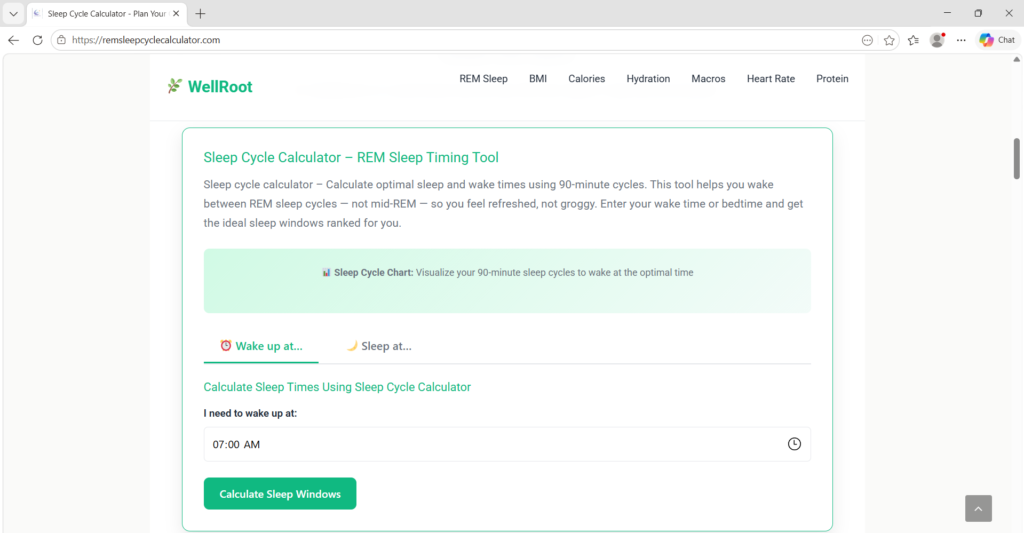
Use the simple formula below to calculate your perfect bedtime:
The Formula:
Bedtime = Wake-up time − (Number of cycles × 90 minutes) − 15 minutes (to fall asleep)
Quick Reference Bedtime Table
| Wake-Up Time | 4 Cycles (6 hrs) | 5 Cycles (7.5 hrs) | 6 Cycles (9 hrs) |
|---|---|---|---|
| 5:00 AM | 10:45 PM | 9:15 PM | 7:45 PM |
| 6:00 AM | 11:45 PM | 10:15 PM | 8:45 PM |
| 6:30 AM | 12:15 AM | 10:45 PM | 9:15 PM |
| 7:00 AM | 12:45 AM | 11:15 PM | 9:45 PM |
| 7:30 AM | 1:15 AM | 11:45 PM | 10:15 PM |
| 8:00 AM | 1:45 AM | 12:15 AM | 10:45 PM |
💡 Pro Tip: 5 complete cycles (7.5 hours) is the sweet spot for most adults. It gives your brain enough REM sleep without leaving you groggy.
What Are Sleep Cycles?
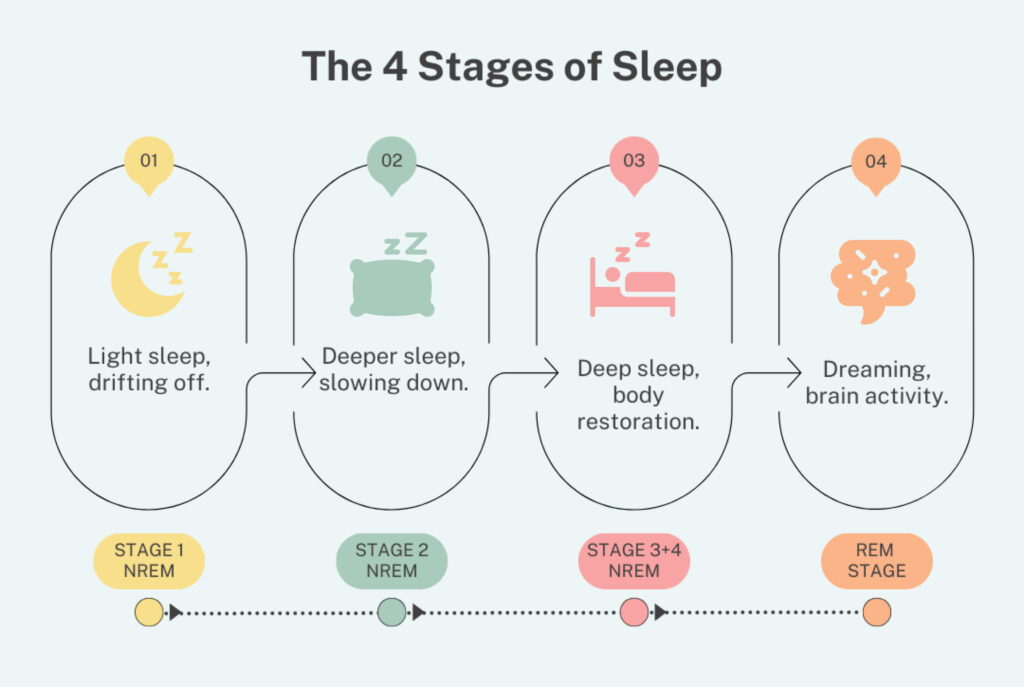
A sleep cycle is one complete journey through all stages of sleep. Each cycle lasts approximately 90 minutes and consists of four distinct stages:
Stage 1: Light Sleep (NREM 1)
- Lasts 1–7 minutes
- The transition between wakefulness and sleep
- Muscles may twitch (hypnic jerks)
- Easily awakened at this stage
Stage 2: Light Sleep (NREM 2)
- Lasts 10–25 minutes
- Body temperature drops
- Heart rate slows down
- Brain produces sleep spindles — bursts of brain activity that consolidate memory
Stage 3: Deep Sleep (NREM 3)
- Lasts 20–40 minutes (longer in early cycles)
- Also called “slow-wave sleep”
- Hardest stage to wake from
- Body repairs tissues, builds muscle, strengthens immune system
- Critical for physical recovery
Stage 4: REM Sleep
- Lasts 10–60 minutes (longer in later cycles)
- Eyes move rapidly beneath eyelids
- Most vivid dreaming occurs here
- Brain is nearly as active as when you’re awake
- Critical for memory consolidation, emotional processing, and creativity
| Stage | Type | Duration | What Happens |
|---|---|---|---|
| Stage 1 | NREM 1 (Light) | 1–7 min | Transition to sleep, muscle twitches |
| Stage 2 | NREM 2 (Light) | 10–25 min | Heart rate slows, memory consolidation begins |
| Stage 3 | NREM 3 (Deep) | 20–40 min | Body repairs tissue, immune system strengthens |
| Stage 4 | REM Sleep | 10–60 min | Vivid dreaming, memory & emotion processing |
What Is REM Sleep and Why Does It Matter?
REM stands for Rapid Eye Movement. It’s the sleep stage where your brain is busiest — processing emotions, consolidating memories, and solving problems you were wrestling with during the day.
Here’s why REM sleep is so important:
Memory & Learning During REM sleep, your brain replays and consolidates the information you learned during the day. Students who get adequate REM sleep perform significantly better on memory tests than those who are sleep-deprived.
Emotional Regulation REM sleep helps your brain process emotional experiences. People who are deprived of REM sleep tend to be more reactive, anxious, and emotionally unstable.
Creativity & Problem Solving Many artists, writers, and scientists report that their best ideas come after a good night’s sleep — that’s REM sleep at work, making novel connections between ideas.
Mental Health Chronic REM sleep deprivation is linked to depression, anxiety, and even an increased risk of neurodegenerative diseases like Alzheimer’s.

How REM Sleep Changes Throughout the Night
Here’s something most people don’t know: REM sleep is not evenly distributed throughout the night.
In your first sleep cycle, REM lasts only about 10 minutes. But by your fourth or fifth cycle (in the early morning hours), REM sleep can last up to an hour.
| Sleep Cycle | Time of Night | REM Duration |
|---|---|---|
| Cycle 1 | 10:30 PM – 12:00 AM | ~10 minutes |
| Cycle 2 | 12:00 AM – 1:30 AM | ~20 minutes |
| Cycle 3 | 1:30 AM – 3:00 AM | ~30 minutes |
| Cycle 4 | 3:00 AM – 4:30 AM | ~45 minutes |
| Cycle 5 | 4:30 AM – 6:00 AM | ~60 minutes |
This is why cutting your sleep short by just 1–2 hours in the morning can rob you of a disproportionate amount of your REM sleep — the most important cycles for mental clarity and emotional wellbeing.
“We recommend the Fitbit Inspire 3 Sleep tracker for sleep tracking and heart rate.”

Why You Wake Up Feeling Groggy (Sleep Inertia Explained)
Have you ever been jolted awake by an alarm and felt completely disoriented, heavy, and foggy for 20–30 minutes? That’s called sleep inertia — and it almost always happens when you’re woken up in the middle of deep sleep (NREM Stage 3).
If you wake up naturally at the end of a sleep cycle, you’ll feel much more alert and refreshed — even if you slept fewer total hours.
This is exactly why the sleep cycle calculator is so powerful. By timing your bedtime so you complete full cycles, you’re much more likely to wake up naturally between cycles rather than being dragged out of deep sleep.

“We recommend the LectroFan EVO Non-Looping Sound Machine for improving deep sleep.”

How Many Hours of Sleep Do You Actually Need?
The National Sleep Foundation recommends the following:
| Age Group | Recommended Sleep |
|---|---|
| Newborns (0–3 months) | 14–17 hours |
| Infants (4–11 months) | 12–15 hours |
| Toddlers (1–2 years) | 11–14 hours |
| Preschool (3–5 years) | 10–13 hours |
| School-age (6–13 years) | 9–11 hours |
| Teenagers (14–17 years) | 8–10 hours |
| Adults (18–64 years) | 7–9 hours |
| Older Adults (65+) | 7–8 hours |
However, the right number of sleep cycles — not just total hours — matters more than most people realize. 7.5 hours (5 cycles) is ideal for most adults, as it ensures adequate deep sleep in early cycles and plenty of REM sleep in later cycles.
Step-by-Step: How to Use the Sleep Cycle Calculator
Step 1: Determine Your Wake-Up Time
What time do you need to be up? Be realistic — factor in your alarm, morning routine, and commute.
Step 2: Count Backward in 90-Minute Intervals
From your wake-up time, subtract 90 minutes for each cycle you want to complete.
Example: Wake up at 7:00 AM
- 5 cycles back = 7:00 AM − 7.5 hours = 11:30 PM
- Add 15 minutes to fall asleep = 11:15 PM bedtime
Step 3: Subtract 15 Minutes to Fall Asleep
On average, it takes a healthy adult about 15 minutes to fall asleep. Factor this into your bedtime.
Step 4: Be Consistent
The single most powerful thing you can do for sleep quality is go to bed and wake up at the same time every day — even on weekends. This regulates your circadian rhythm and makes falling asleep and waking up much easier.
7 Science-Backed Tips to Improve Your Sleep Cycles
1. Keep a Consistent Sleep Schedule
Your body’s internal clock (circadian rhythm) works best with routine. Going to bed and waking at the same time daily — even on weekends — regulates your sleep stages and makes REM sleep more efficient.
2. Create a Pre-Sleep Wind-Down Routine
Your brain needs a signal that it’s time to sleep. Spend 30–60 minutes before bed doing calming activities: reading, gentle stretching, meditation, or a warm bath.
3. Avoid Screens Before Bed
Blue light from phones, tablets, and computers suppresses melatonin production — the hormone that signals your body it’s time to sleep. Try to avoid screens for at least 60 minutes before bed, or use blue-light blocking glasses.
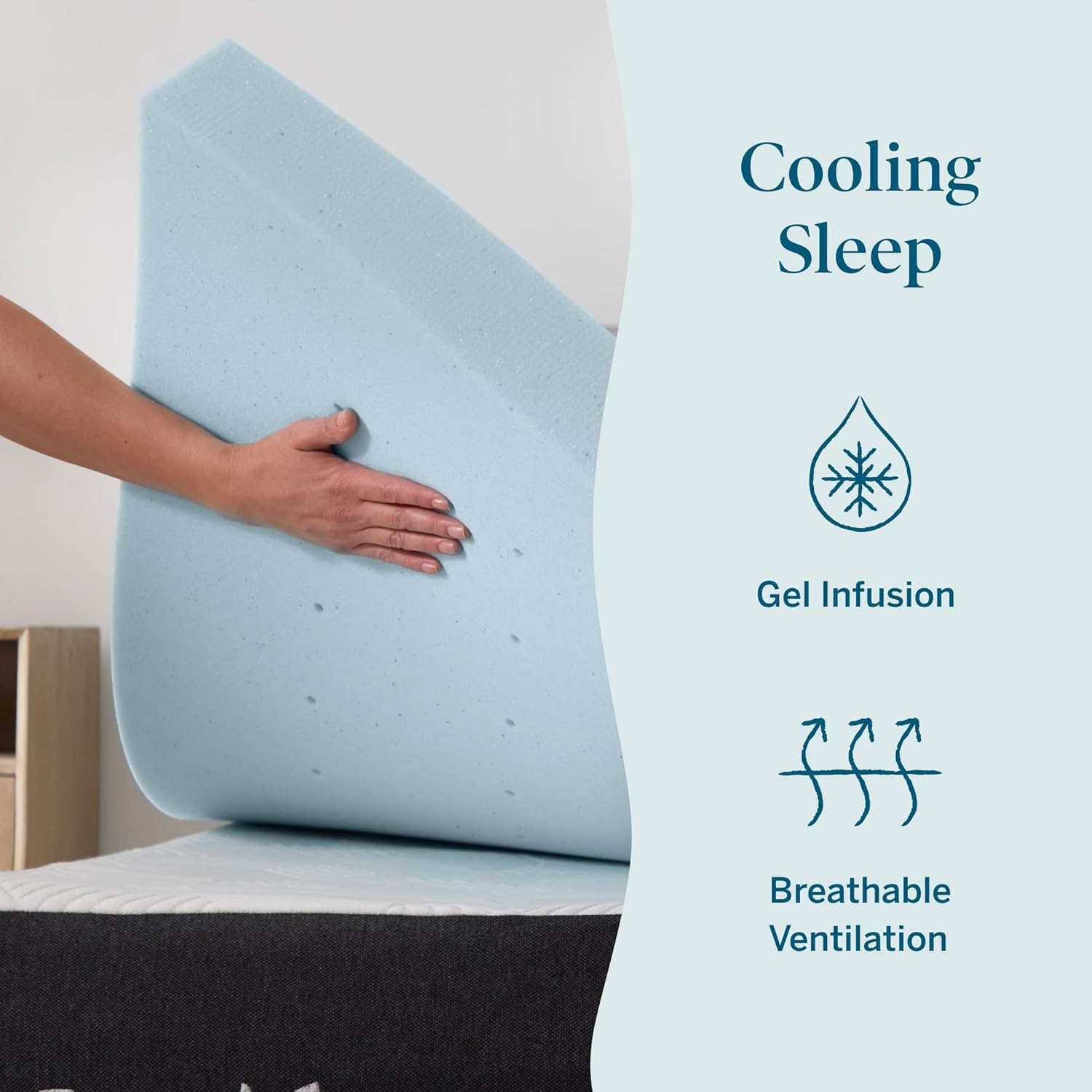
4. Keep Your Room Cool and Dark
Your body temperature naturally drops when you sleep. A cool room (around 65–68°F / 18–20°C) facilitates this process. Blackout curtains can block light that disrupts melatonin production.
“We recommend the Yescool Weighted Blanket for cool sleep.”

“We recommend the Lucid 3 inch Memory Foam Mattress for cool sleep.”
5. Limit Caffeine After 2 PM
Caffeine has a half-life of 5–7 hours. A coffee at 3 PM means half that caffeine is still in your system at 9 PM, making it harder to fall into deep sleep and reducing REM quality.
6. Avoid Alcohol Before Bed
Many people think alcohol helps them sleep — and it does help you fall asleep faster. But alcohol severely disrupts REM sleep in the second half of the night, leaving you feeling unrested even after a full night in bed.

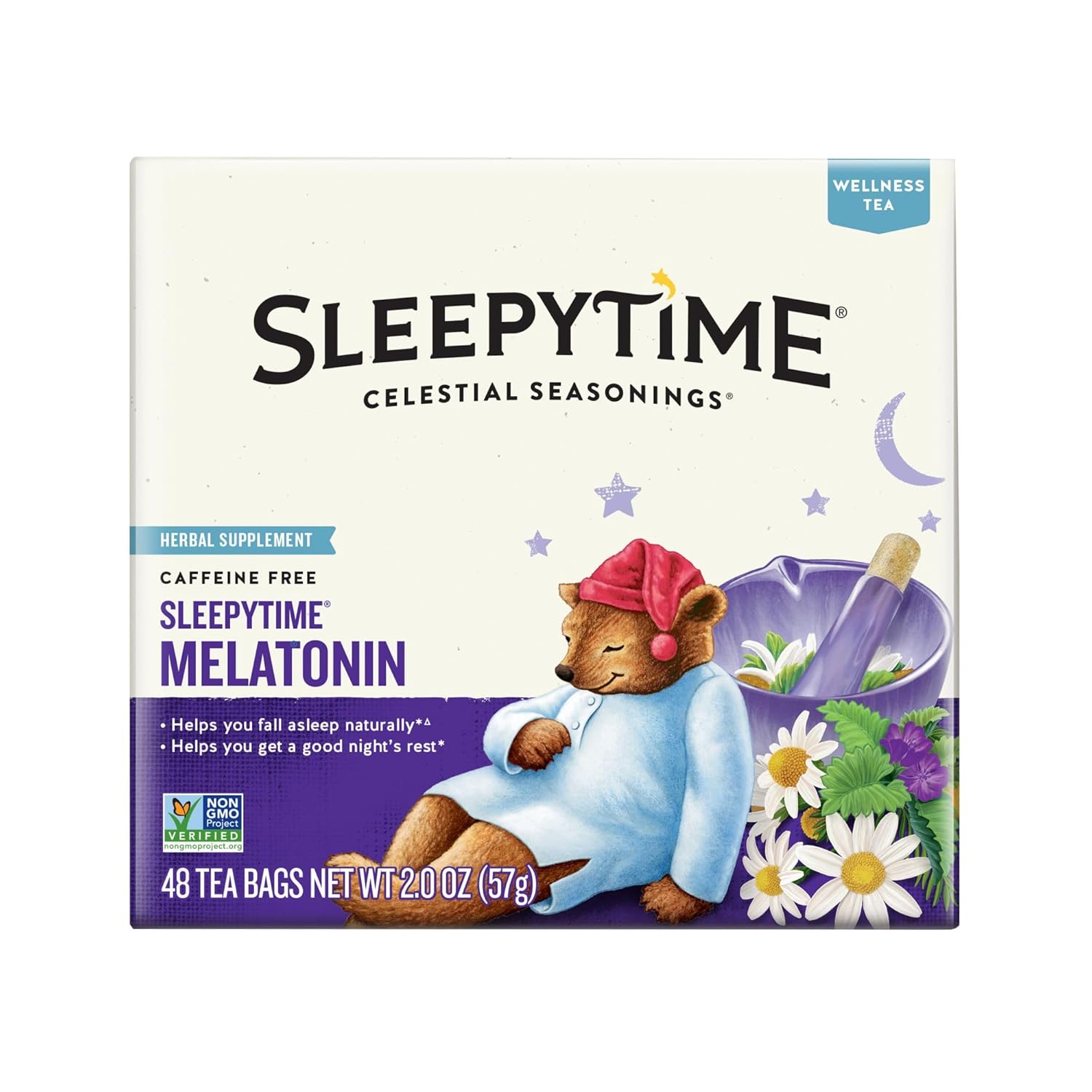
7. Exercise Regularly — But Not Too Late
Regular physical activity improves sleep quality significantly. However, intense exercise within 2–3 hours of bedtime can raise your body temperature and heart rate, making it harder to fall asleep.

What Disrupts Your Sleep Cycles?
Understanding what breaks your cycles is just as important as planning for complete ones.
Common Sleep Cycle Disruptors:
- Irregular sleep schedules (shifting your bedtime by even 1–2 hours)
- Stress and anxiety (elevated cortisol suppresses deep sleep)
- Alcohol and sedatives (suppress REM sleep)
- Sleep apnea (causes repeated micro-awakenings throughout the night)
- Noise and light pollution
- Caffeine consumed too late in the day
- Shift work and jet lag

Special Sleep Scenarios
Sleep Schedule for Shift Workers
If you work night shifts, your body naturally fights against sleeping during the day. Tips:
- Use blackout curtains and white noise machines
- Keep your sleep schedule consistent even on days off
- Use the calculator based on your scheduled wake time, not conventional hours
Sleep Schedule for Students
Students often sacrifice sleep during exam periods — the worst possible strategy. Sleep is when memory consolidation happens. A well-rested brain outperforms a sleep-deprived brain every time.
Aim for 5 complete cycles (7.5 hours). If you must cut sleep short, try to at least complete 4 cycles (6 hours) to preserve critical REM sleep.
Napping and Sleep Cycles
If you need a nap, timing matters:
- 20-minute nap: Refreshes without entering deep sleep (no grogginess)
- 90-minute nap: One complete sleep cycle — leaves you feeling refreshed
- Avoid 30–60 minute naps: You’ll wake up in deep sleep and feel groggy

Frequently Asked Questions
Q: Is 6 hours of sleep enough if I time my sleep cycles?
Six hours equals 4 complete sleep cycles. It’s better than randomly sleeping 6.5 hours (waking mid-cycle), but still below the recommended 7–9 hours for most adults. Use it as a minimum, not a goal.
Q: Can I make up for lost sleep on weekends?
You can partially recover from sleep deprivation, but “sleep banking” doesn’t really work long-term. Chronic sleep debt has cumulative effects on health that weekend sleep doesn’t fully reverse.
Q: Why do I remember my dreams some mornings?
You’re most likely to remember dreams if you wake up during or right after REM sleep. If you rarely remember dreams, you might be waking up during deep sleep — a sign your sleep timing may be off.
Q: Does everyone need exactly 90-minute cycles?
Sleep cycle length varies slightly from person to person (between 80–120 minutes), but 90 minutes is the widely accepted average. If you find you consistently feel better waking at a different interval, adjust accordingly.
Conclusion
Getting quality sleep isn’t just about spending enough time in bed — it’s about working with your body’s natural sleep architecture. By timing your bedtime to align with complete 90-minute sleep cycles, you give yourself the best possible chance of waking up refreshed, mentally sharp, and emotionally resilient.
Use the bedtime table in this guide as your starting point, experiment with what feels best for your body, and most importantly — be consistent.
Your ideal bedtime is closer than you think.